
Mahjongg Toy Chest: Everything You Need to Know
If you’ve ever searched for a relaxing yet mentally stimulating way to pass the time online, chances are you’ve stumbled across Mahjongg Toy Chest. This charming, toy-themed twist on the classic Mahjong solitaire formula has captured the attention of casual gamers, puzzle enthusiasts, and nostalgia-seekers alike. In this comprehensive guide, we’ll explore everything there is to know about Mahjongg Toy Chest — from its gameplay mechanics and origins to strategy tips, platform availability, and why it continues to attract dedicated players years after its release.
This article is part of our ongoing Gaming & Technology coverage, where we regularly break down the puzzle and casual gaming trends shaping how people play online today.
What Is Mahjongg Toy Chest?
At its core, Mahjongg Toy Chest is a tile-matching puzzle game built on the foundation of traditional Mahjong solitaire. Unlike the four-player tabletop game most people associate with the Mahjong name, Mahjongg Toy Chest belongs to a different family entirely: Mahjong solitaire, a single-player digital adaptation that has become enormously popular on casual gaming websites.
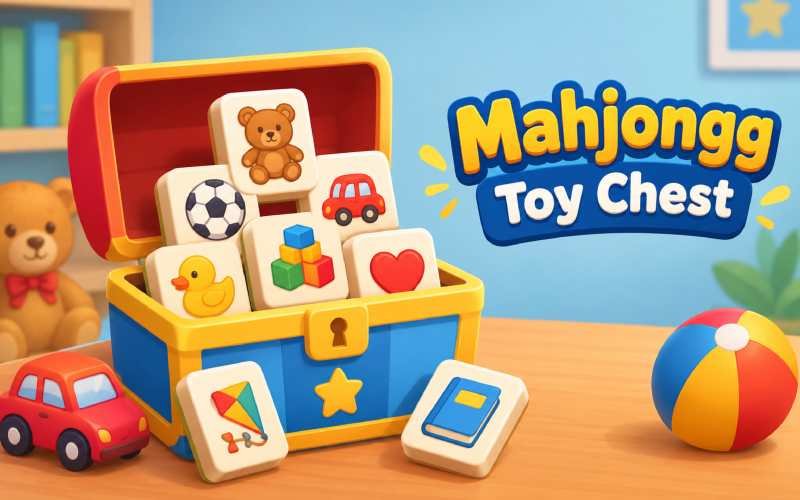
The game’s defining feature is its playful, toy-box theme. Instead of the traditional bamboo, character, and dragon tiles found in classic Mahjong sets, Mahjongg Toy Chest replaces them with colorful, animated icons depicting children’s toys — soccer balls, teddy bears, building blocks, cars, hearts, and books, among others. The objective is simple in concept but engaging in execution: match pairs of identical tiles to clear them from the board, working your way through a virtual toy chest one layer at a time.
This whimsical presentation is part of what sets Mahjongg Toy Chest apart from more traditional Mahjong solitaire variants. It transforms what could be a fairly dry puzzle exercise into something that feels playful, cozy, and approachable — appealing equally to children discovering the genre for the first time and adults looking for a nostalgic, low-stress gaming break.
How to Play Mahjongg Toy Chest
For newcomers, understanding the core mechanics of Mahjongg Toy Chest is straightforward, even if mastering it takes practice. Here’s a breakdown of how the game typically works:
The Basic Objective
The primary goal is to clear the entire board by matching pairs of identical tiles. However, tiles can’t simply be selected at random. A tile is only considered “free” — and therefore selectable — if it meets specific positional criteria, usually requiring at least one open side (left or right) with no adjacent tile blocking it.
Matching Rules
Once you identify two free tiles that share the same toy icon, you can select them to remove both from the board simultaneously. This process continues, layer by layer, as tiles are cleared and previously blocked tiles become accessible. As the board opens up, players often find that strategic thinking becomes more important than simple pattern recognition, since clearing certain tiles can either open up new opportunities or accidentally block off others.
Racing the Clock
Many versions of Mahjongg Toy Chest incorporate a time-based challenge element. Rather than allowing unlimited time to solve each puzzle, players are encouraged to clear the board as quickly as possible, often with bonus points awarded for matching the same tile type consecutively or maintaining a fast-paced streak. This timed structure adds a layer of urgency that distinguishes it from more meditative, untimed Mahjong solitaire variants.
Layered Board Design
One of the more satisfying aspects of Mahjongg Toy Chest is its layered board structure. Tiles are stacked in a pyramid-like or freeform arrangement, meaning that some tiles start out completely hidden beneath others. As you clear the top layers, previously inaccessible tiles become available, gradually revealing the full puzzle and requiring players to plan several moves ahead rather than simply reacting to what’s immediately visible.
The Appeal of the Toy Chest Theme
Why has the toy chest theme resonated so strongly with players? There are a few key reasons worth examining.
Nostalgia and Comfort
The toy-based imagery taps into a sense of childhood nostalgia that many players find comforting. Rather than abstract symbols or unfamiliar characters, the tiles depict recognizable, universally understood objects — the kinds of toys most people remember playing with growing up. This familiarity lowers the barrier to entry, making the game accessible even to players who have never engaged with traditional Mahjong before.
Visual Clarity
From a design perspective, the toy chest theme also serves a practical purpose. Because the icons are colorful, distinct, and easy to differentiate at a glance, players — including younger audiences — can quickly learn to identify matching pairs without needing to memorize complex or visually similar symbols. This makes Mahjongg Toy Chest particularly well-suited as an entry point for players who are new to the Mahjong solitaire genre.
A Sense of Progress
There’s also something inherently satisfying about the “cleaning up the toy chest” narrative woven into the gameplay. As tiles disappear, players get the visual and psychological reward of watching a cluttered space become tidy and organized — a subtle but effective motivational hook that keeps players engaged from one level to the next.
Where to Play Mahjongg Toy Chest
One of the most appealing aspects of Mahjongg Toy Chest is its widespread availability across numerous casual gaming platforms. Unlike many premium puzzle games that require downloads, purchases, or account creation, Mahjongg Toy Chest is typically available to play instantly in a web browser, free of charge.
Popular casual gaming portals — including those affiliated with major media brands, retirement and lifestyle platforms, and dedicated Mahjong game websites — commonly feature Mahjongg Toy Chest as part of their broader puzzle game libraries. This broad distribution has helped the game maintain a steady, loyal player base over the years, even as newer puzzle titles continue to enter the market. Two of the most established places to play it online are Arkadium and Mahjong.com, both of which host the game free of charge directly in the browser.
Additionally, many platforms offer variations of the core game, such as “Classic Edition” versions that preserve the original tile design and gameplay mechanics for players who prefer a more traditional experience, alongside updated versions that may include enhanced graphics or additional features.
Strategy Tips for Mastering Mahjongg Toy Chest
While Mahjongg Toy Chest is easy to pick up, achieving consistently fast clear times or high scores requires a bit of strategic thinking. Here are some tips that can help players improve their performance:
1. Scan the Entire Board Before Making a Move
Rather than immediately matching the first pair of free tiles you spot, take a moment to scan the full board. Sometimes an obvious match isn’t the most strategic one — clearing a different pair first might open up additional matching opportunities or prevent tiles from becoming trapped later in the game.
2. Prioritize Tiles That Unlock Multiple Paths
Because the board is layered, some tiles are more strategically valuable than others. Tiles that, once cleared, expose multiple new tiles underneath are generally worth prioritizing over tiles that only reveal a single additional tile. This approach helps maintain flexibility and reduces the risk of getting stuck later in the round.
3. Watch for Isolated Tiles
Keep an eye out for tiles that risk becoming isolated — meaning they may eventually have no matching pair accessible due to how the board clears. Addressing these tiles earlier, when possible, can prevent frustrating dead-end situations later in the game.
4. Use Streaks Strategically
Since many versions of Mahjongg Toy Chest reward consecutive matches of the same tile type with bonus points, it can be worth planning your moves around building streaks when multiple matching pairs are available. This not only boosts your score but also often reflects more efficient, forward-thinking play.
5. Practice Pattern Recognition
As with any tile-matching game, repeated play naturally improves pattern recognition skills. The more you play Mahjongg Toy Chest, the faster you’ll become at identifying matches and anticipating how clearing one tile will affect the rest of the board.
Who Plays Mahjongg Toy Chest?
Mahjongg Toy Chest has cultivated a notably diverse player base, which speaks to its broad, cross-generational appeal.
Casual Gamers Seeking Relaxation
Many players turn to Mahjongg Toy Chest specifically as a low-stress way to unwind. Unlike fast-paced action games or competitive multiplayer titles, Mahjong solitaire games offer a more meditative experience — engaging enough to hold attention, but not so demanding that it becomes stressful.
Puzzle Enthusiasts
For dedicated puzzle game fans, Mahjongg Toy Chest offers a satisfying blend of pattern recognition, spatial reasoning, and light strategic planning. It’s often played alongside other puzzle formats like crosswords, solitaire card games, and word searches, appealing to players who enjoy exercising their minds in a relaxed setting.
Older Adults and Cognitive Engagement
Interestingly, Mahjongg Toy Chest and similar Mahjong solitaire games have found a particularly strong following among older adult audiences. Numerous casual gaming platforms geared toward this demographic feature Mahjongg Toy Chest prominently, often citing the cognitive benefits associated with regular puzzle play, including improved memory and concentration.
Children and Families
Thanks to its bright visuals, simple rules, and toy-based theme, Mahjongg Toy Chest is also accessible to younger players. Parents looking for age-appropriate digital puzzle games often find it to be an engaging, non-violent option that still offers meaningful cognitive challenge.
The Broader Mahjong Solitaire Genre
To fully appreciate Mahjongg Toy Chest, it helps to understand its place within the broader Mahjong solitaire genre. Traditional Mahjong solitaire emerged as a digital adaptation of the classic tile-based game — a distinct branch of the family tree from the four-player tabletop version most people know as Mahjong, designed specifically for single-player use. Over the years, countless variations have emerged, each offering its own visual theme, board layout, and gameplay tweaks.
Some versions emphasize elaborate board designs meant to resemble intricate pyramids or animals, while others — like Mahjongg Toy Chest — lean into a specific narrative theme to differentiate themselves from the pack. This flexibility is part of what has allowed the genre to remain relevant for so long: the underlying mechanics are simple and endlessly adaptable, while thematic variations keep the experience feeling fresh.
Mahjongg Toy Chest fits comfortably within this broader ecosystem, offering players a distinctive, toy-themed alternative to more traditional presentations while preserving the core gameplay mechanics that made Mahjong solitaire popular in the first place.
Why Mahjongg Toy Chest Continues to Endure
In an online gaming landscape saturated with new releases, flashy graphics, and constantly evolving trends, it’s worth asking why a relatively simple game like Mahjongg Toy Chest continues to attract players year after year.
Accessibility
Because it requires no downloads, no complex controls, and minimal onboarding, Mahjongg Toy Chest remains one of the most accessible puzzle games available. Anyone with a web browser can start playing within seconds, which significantly lowers the barrier to entry compared to more complex gaming experiences.
Low-Pressure Engagement
Unlike competitive or narrative-driven games that demand sustained attention and emotional investment, Mahjongg Toy Chest offers a low-pressure form of engagement. Players can pick it up for a quick five-minute session or settle in for a longer play session, without feeling like they’re missing out on a larger, ongoing story or progression system.
Timeless Design Principles
The underlying tile-matching mechanic has proven remarkably durable over time. Much like classic card games such as solitaire or freecell, the appeal of Mahjong solitaire lies in its balance of simplicity and depth — easy to understand, but genuinely challenging to master.
Cross-Platform Availability
Finally, the game’s widespread availability across numerous gaming portals ensures that new players continue to discover it regularly, even without active marketing efforts. Its presence on well-established casual gaming websites means it benefits from consistent organic traffic, helping it maintain relevance in an otherwise crowded market.
Comparing Mahjongg Toy Chest to Other Popular Variants
Since Mahjong solitaire has spawned so many themed variations, it’s worth understanding how Mahjongg Toy Chest compares to some of its closest siblings within the genre.
Toy Chest vs. Classic Mahjong Solitaire
Traditional Mahjong solitaire uses the original tile set found in the tabletop version of the game — bamboo sticks, circles, characters, dragons, winds, and flowers. While visually rich and steeped in cultural history, these symbols can be harder for newcomers to quickly distinguish, especially at a glance during fast-paced play. Mahjongg Toy Chest simplifies this by replacing the traditional icon set with bright, unmistakable toy imagery, making it noticeably more approachable for casual and younger players without sacrificing the strategic depth of the underlying match mechanic.
Toy Chest vs. Seasonal or Holiday-Themed Variants
Many Mahjong solitaire platforms also offer seasonal variants — versions themed around winter holidays, autumn harvests, or spring gardens, for example. These themed editions often rotate in and out of availability depending on the time of year. Mahjongg Toy Chest, by contrast, maintains a consistent, evergreen presence on most platforms, which has helped it build a more stable, long-term player base rather than relying on seasonal spikes in interest.
Toy Chest vs. 3D or Animal-Themed Boards
Some Mahjong solitaire adaptations experiment with elaborate 3D board structures or animal-shaped layouts, prioritizing visual spectacle over accessibility. While visually impressive, these versions can sometimes feel more complex or visually cluttered. Mahjongg Toy Chest tends to favor cleaner, more legible board designs, which supports its appeal among players who prioritize a smooth, low-friction gaming experience over elaborate presentation.
The Psychology Behind Tile-Matching Games
Part of what makes Mahjongg Toy Chest — and Mahjong solitaire games more broadly — so enduringly popular comes down to some well-understood principles of cognitive psychology and game design.
Pattern Recognition and Flow State
Tile-matching games are particularly effective at inducing what psychologists refer to as a “flow state” — a mental state of focused immersion where a task feels neither too easy nor too difficult. Mahjongg Toy Chest strikes this balance well: the rules are simple enough to grasp instantly, yet the layered board design ensures that later stages of a puzzle demand genuine attention and planning, keeping players appropriately challenged without becoming frustrated.
The Reward of Visual Progress
As discussed earlier, watching a cluttered toy chest gradually empty out taps into a powerful, universally understood reward signal: visible progress. This type of design, sometimes referred to as a “clearing mechanic,” is used across many successful puzzle games because it provides constant, incremental feedback that reinforces continued play.
Short Session Design
Mahjongg Toy Chest is also well-suited to short gaming sessions, which aligns closely with how many casual players actually engage with browser-based games — often during short breaks, while multitasking, or as a way to decompress between other daily activities. This “snackable” session length is a significant factor in the game’s sustained popularity, particularly compared to longer-form games that require sustained, uninterrupted attention.
Tips for Parents Introducing Kids to Mahjongg Toy Chest
Given its family-friendly theme, many parents use Mahjongg Toy Chest as an early introduction to puzzle gaming for younger children. Here are a few suggestions for making the experience as positive and educational as possible:
- Start with untimed modes, if available. Removing the time pressure allows younger players to focus purely on pattern recognition without the added stress of a countdown clock.
- Encourage verbal reasoning. Ask children to explain out loud why they’re choosing a particular tile pair. This reinforces logical thinking and helps build vocabulary around spatial concepts like “blocked,” “free,” and “matching.”
- Celebrate small wins. Since the toy-chest theme naturally lends itself to a sense of accomplishment, take a moment to acknowledge each cleared level as a small, meaningful achievement.
- Use it as a screen-time alternative to more passive content. Compared to passive video watching, active puzzle-solving games like Mahjongg Toy Chest engage cognitive skills more directly, making it a reasonable option for parents looking to make screen time more mentally engaging.
Frequently Asked Questions
Is Mahjongg Toy Chest free to play? Yes, Mahjongg Toy Chest is widely available as a free browser-based game across numerous casual gaming platforms, requiring no purchase or download.
Do I need a Mahjong background to play? Not at all. While the game borrows its name and core mechanics from traditional Mahjong, no prior knowledge of the tabletop game is necessary. The rules are simple enough for complete beginners to pick up quickly.
Is there a time limit? Many versions include a timed element, encouraging players to clear the board as quickly as possible, though some platforms may offer more relaxed, untimed modes as well.
Can I play Mahjongg Toy Chest on mobile devices? Most browser-based versions are optimized for both desktop and mobile play, though the exact experience may vary depending on the specific platform hosting the game.
Are there different versions of the game? Yes, several variations exist, including “Classic Edition” versions that preserve the original visual style, alongside standard versions that may feature updated graphics or additional gameplay elements.
Getting the Most Out of Your Mahjongg Toy Chest Sessions
For players looking to deepen their enjoyment of the game beyond casual play, a few additional habits can help maximize both performance and long-term enjoyment.
Track Your Personal Best
Many platforms hosting Mahjongg Toy Chest display completion times or scores after each round. Keeping track of your personal best times can add a light, self-motivated competitive element to what is otherwise a relaxed experience, encouraging steady improvement over repeated sessions.
Take Breaks Between Rounds
While it’s tempting to play multiple rounds back to back, taking short breaks between sessions can actually improve pattern recognition over time. Stepping away, even briefly, allows the brain to consolidate the visual patterns learned during play, often leading to faster, more intuitive matching in subsequent rounds.
Explore Related Games on the Same Platform
Most platforms that host Mahjongg Toy Chest also feature a broader library of related puzzle games. Exploring these adjacent titles can help players discover new variations of the tile-matching formula, keeping the overall experience fresh while still enjoying the core mechanics that made Mahjongg Toy Chest appealing in the first place.
Final Thoughts
Mahjongg Toy Chest stands as a wonderful example of how a simple, well-executed concept can maintain lasting appeal in an increasingly crowded digital gaming landscape. By combining the timeless mechanics of Mahjong solitaire with a playful, nostalgic toy-chest theme, it manages to appeal to an impressively broad audience — from young children discovering puzzle games for the first time, to older adults seeking a relaxing, cognitively engaging pastime.
Its accessibility, charm, and satisfying gameplay loop explain why it continues to be a staple on casual gaming platforms years after its initial release. Whether you’re looking for a quick mental break during a busy day or a longer, more immersive puzzle-solving session, Mahjongg Toy Chest offers a low-pressure, endlessly replayable experience that’s easy to recommend to virtually anyone who enjoys a good tile-matching challenge.
If you haven’t tried it yet, there’s no better time to dive in, clear out that virtual toy chest, and see how quickly you can master its charming, colorful puzzles.
For more coverage of casual games, gamification trends, and the technology behind the platforms we love, browse our Gaming & Technology section, or get in touch with us if there’s a game or topic you’d like us to cover next. You can also learn more about who we are on our About Us page.